
The People Become More Than Their Deeds
The ProphetThis flow follows Almustafa’s portrait of human beings as divided yet capable of growth, and culminates in his appeal not to reduce anyone to a single failure.
increasing Bearing strength in each event
 decreasing
Bearing strength in each eventdecreasingThe Human Mixture
The Human Mixture
More than One Self
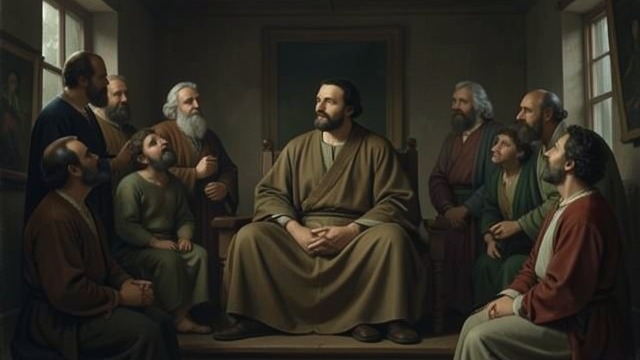
Almustafa describes people as containing a god-self, an ordinary human self, and a still-unformed pigmy searching for awakening. No single part represents the whole person.
Wrong without Exile
He challenges the habit of treating a wrongdoer as a stranger intruding on a blameless community. His account makes wrongdoing intelligible within a shared and unfinished human condition.
The Deeds of the Group

The Deeds of the Group
Shared Conditions
Almustafa says that a wrongdoer cannot do wrong without the hidden will of others. The image of a leaf turning yellow through the knowledge of the whole tree links individual action to communal conditions.
Responsibility without Denial
This does not make a wrong disappear; it expands the question of responsibility. The community must consider what it allowed, failed to notice, or left in place.
The Fallen as a Warning
The Fallen as a Warning
A Fall Seen by Others
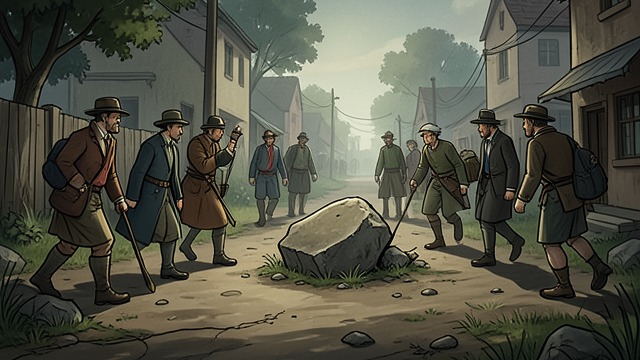
Almustafa says that when one person falls, those behind receive a warning and those ahead are implicated if they left the stumbling stone in place. Human movement is presented as shared rather than isolated.
A Path Made Together
The people are both the way and the wayfarers. The image turns another person’s misfortune into a call for attention to the road, not merely an occasion for blame.
Goodness as Becoming

Goodness as Becoming
Growth at Different Speeds
Almustafa describes goodness as striving to give, speaking awake, and walking firmly, while hesitation and self-seeking do not automatically make someone evil. People move toward fuller selves at different speeds.
Patience with the Slow
He warns the strong not to limp before the lame in the name of kindness and says that the truly good do not shame the naked or houseless. His account values growth without making one person’s pace the measure of everyone else.
A Vastness Beyond Failure

A Vastness Beyond Failure
The Whole Person Exceeds a Deed
Almustafa argues that judging people by their failures is like blaming the seasons for their inconsistency. A person contains changing capacities that cannot be measured by one act.
Strength beside Weakness
He tells the residents that they are as strong as their strongest link as well as weak as their weakest. The farewell enlarges his earlier account of shared responsibility into an appeal to recognize human possibility.
During the teaching on crime and punishment
After Almustafa introduces the divided self
In the middle of the crime and punishment teaching
During the teaching on good and evil
During the farewell address before the ship’s departure
